Hamar (Norway) | 20–21 April 2026 — Co-funded by the European Union (Project No. 101196622)
Experts and educators from nine European countries convened at INN University in Hamar to progress the practical implementation of Work Package 2 (WP2) within the TAPPEO project, focusing on young learners’ cognitive and linguistic development. This transnational meeting proved that learning languages does not have to happen at a quiet desk with vocabulary drills; it can happen while building catapults, tying figure-eight knots, or planting bottle gardens.
Starting with a fresh take on modern linguistics, speakers showed that knowing multiple languages is not a set of isolated boxes, but an interconnected repertoire where every language enriches the learner. Through the lens of translanguaging, children use every linguistic tool they possess to explore the world around them, turning science experiments into vibrant social interactions. Real-world evidence backed up these ideas, including findings from the PolskaNorski research project, which demonstrated how supporting home languages alongside majority languages helps multilingual children thrive right from their earliest years.
In addition, representatives from the Benjamín Palencia School in Albacete (Spain) presented their integrated curriculum model, operating since 1996. The school delivers 40% of the weekly schedule in English using CLIL, incorporating strategies such as Jolly Phonics and the Talk for Writing framework.
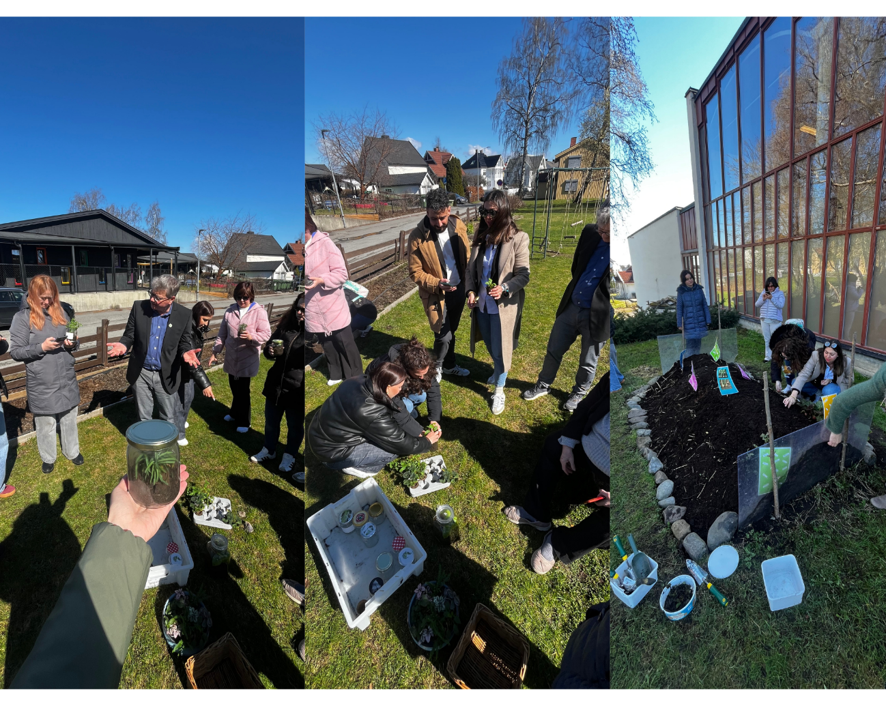
The energy shifted from theory to practice as participants tackled interactive workshops, experiencing firsthand how spatial reasoning with tangrams or team construction projects naturally force people to communicate, negotiate, and describe processes across different languages. The highlight of the trip took everyone outdoors to Flekkenga Nature and Farm Preschool, where children aged three to seven spend their days roaming the forest, caring for farm animals, and learning through genuine curiosity with an impressive ratio of one teacher for every six kids. Experiencing this Norwegian outdoor pedagogy showed educators that real-life experiences create the ultimate backdrop for language learning, allowing children to communicate seamlessly through shared discovery even when they do not share a native language.
The conference consolidated the transition from theoretical research to the design of a plurilingual curriculum for children aged 3 to 7. The consortium’s next transnational meeting will take place in June 2026 in Finland, focusing on digital tools and activities to enhance early childhood multilingualism.
One clear message echoes from Hamar: when children are encouraged to explore, build, and wonder together, language learning happens naturally.